How Your Baby is Made to Move in the First 3 Months– Milestones 0-3 and Primitive Reflexes

Does My Baby Need Exercise?
YES!
All humans— even the tiniest (maybe even especially the tiniest) need movement to thrive. Obviously your one week old isn’t going to be picking up a bar-bell or going for a jog any-time soon… but they’ve got to start putting in the reps they were made to do so they can get there one day! This happens with repeated: rhythmic movement (i.e. rocking, bouncing, etc.), stimulation of their primitive reflexes, and providing opportunities for movement on the floor.
Infants need movement right from the get-go. It’s so tempting to just snuggle that little sweetie all day (and you should do A LOT of that too) but it’s also SO important they get some opportunities to stretch out and learn how to move their new little body. Infants and children are designed to develop physically, mentally, emotionally, and even spiritually, through movement and play.
With the birth of your baby came the priority of PLAY– how cool is that!?
Now let’s talk about a couple of things it’s helpful to know about for your bebe’s movement and play in the first 3 months. I want to preface this by saying— these are not something to obsess over and be rigid about. They are general guidelines for timing and movement and if your baby isn’t doing it perfectly or not on the timeline presented here or other places on the internet, do not worry yourself sick over it. If you do notice your baby routinely demonstrating patterns that don't line up with “typical development” make an appointment with your pediatrician and discuss it with them. Don’t waste any of your time or sanity scouring the internet looking for an answer and finding nothing but certain doom.
That being said, it is a good idea to have basic knowledge of some things you can expect from your newborn so that you can respond with confidence and calmness.
Number one is keeping track of gross motor milestones. These are movements your newborn can do with their body that generally indicate that their development is progressing status quo.
Number two is watching for primitive reflexes. These are innate, involuntary movement patterns that:
-begin developing in utero
-aid in the birth process
-protect the infant
-help them perform necessary functions like feeding and eliminating waste after birth
-connect the infant to their mother or caregivers
-facilitate survival1
If you think of humans evolving over hundreds of thousands of years– these movements make total sense.
A baby startles to alert their mother of a potential threat, they turn to their source of nourishment, hold on with their hands and feet to stay attached to their mothers while they carry them…I can’t get over how fascinating and beautiful it is.
Ultimately these movements begin establishing neural pathways from an infant’s brain to the rest of their body that lay the foundation for higher level sensory and motor functions to develop. FASCINATING.
The third thing to keep in mind is rhythmic movement. Rocking, bouncing, swaying… you find yourself doing it automatically. That’s because it’s what’s good and right for our nervous systems, and you do it instinctively—how amazing! You’ll find as your baby grows, their movement becomes less erratic and more rhythmic, so keep up the rocking and swaying, it’s helping them develop their sensory motor systems, even if you don’t see it yet.
—And that sums up a lot of what you’ll be doing in the next three months… facilitating little opportunities, for little movements, that are going to add up to support your child’s development in ways you can’t even imagine!
Let’s dive into the specifics.
What Should My Baby Be Doing at One Month?
It’s important to note that these are not exhaustive lists of all of the movements and behaviors that your newborn is capable of. It’s intended to inform you of some specific movements related to sensory motor development.
0-1 Month Milestones and Reflexes
At one month you’ll notice your baby:
-turning their head to familiar sounds (like your voice)
-turn their head to the side when they are on their stomach
-demonstrate jerky, involuntary movements
-hold their chin up while they are on their stomach2,3,4,5,7
Primitive reflexes to observe and facilitate at 1 month:
-Moro Reflex. The moro is a sympathetic nervous system response (think fight, flight, or freeze) to sudden stimulus like falling backwards, being jostled abruptly, or loud noises. When this reflex is stimulated you will see your baby “startle”, throwing their head, arms and legs back. They often cry out and then curl their limbs back toward their body.6
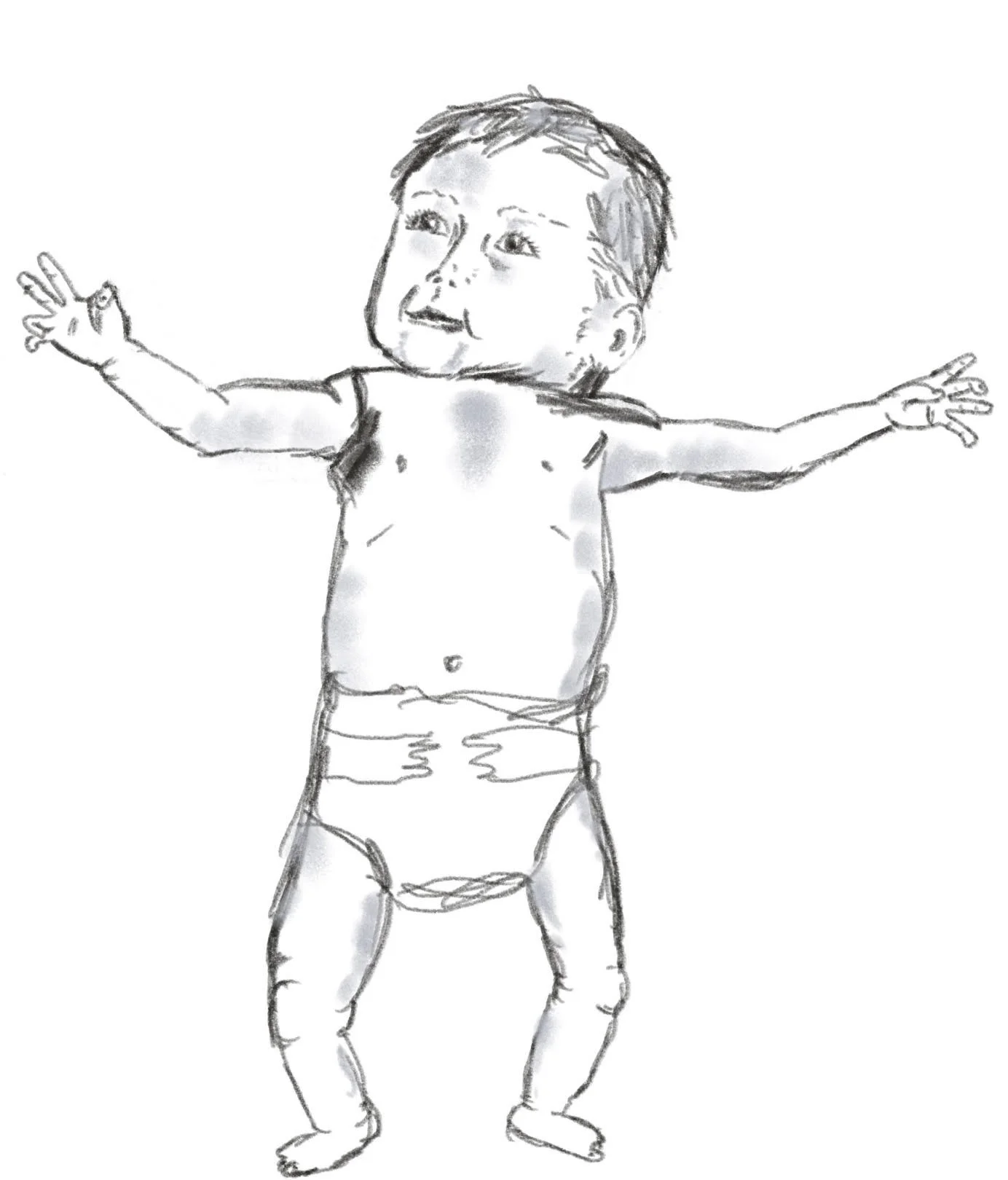
Moro Reflex (sketch by Bailee Adler)
-Rooting Reflex. The rooting reflex is a response to locate food and breast. It is triggered by touch input to the cheek. When this reflex is stimulated you will see your infant turn toward the touch and move their mouth in an attempt to latch.6
-Palmar Grasp Reflex. The palmar reflex is an automatic flexing of the fingers when touch is applied to the infant’s palm. (Probably the cutest reflex.) Think of early humans and their need to carry their newborns everywhere– it benefitted them to be able to hang on! It also helps the infant connect emotionally to their caregivers.6
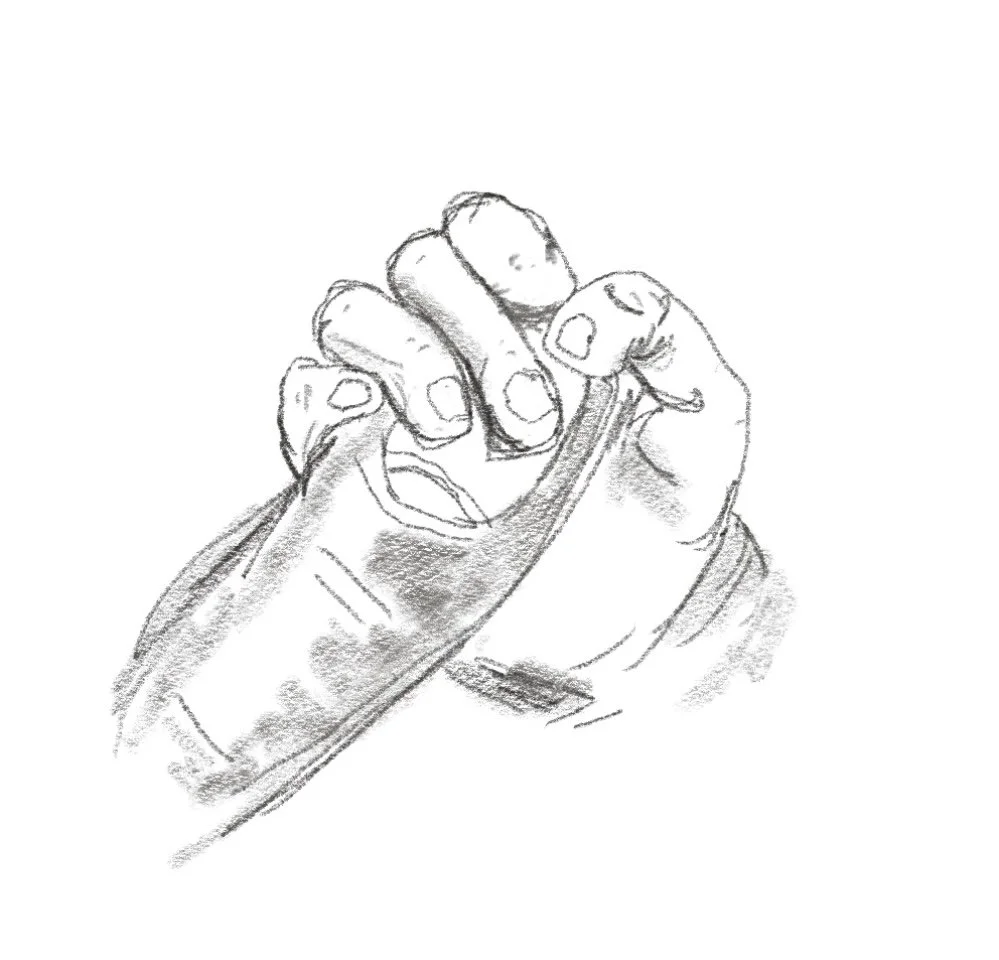
Palmar Grasp Reflex (sketch by Bailee Adler)
-Asymmetric Tonic Neck Reflex (ATNR). This reflex assists the infant through the birth canal at delivery and lays the foundation for cross-body movement patterns. The ATNR is triggered when the infant’s head is turned to the side, the limbs on the side the baby is facing are straightened and the limbs on the opposite side are flexed.6
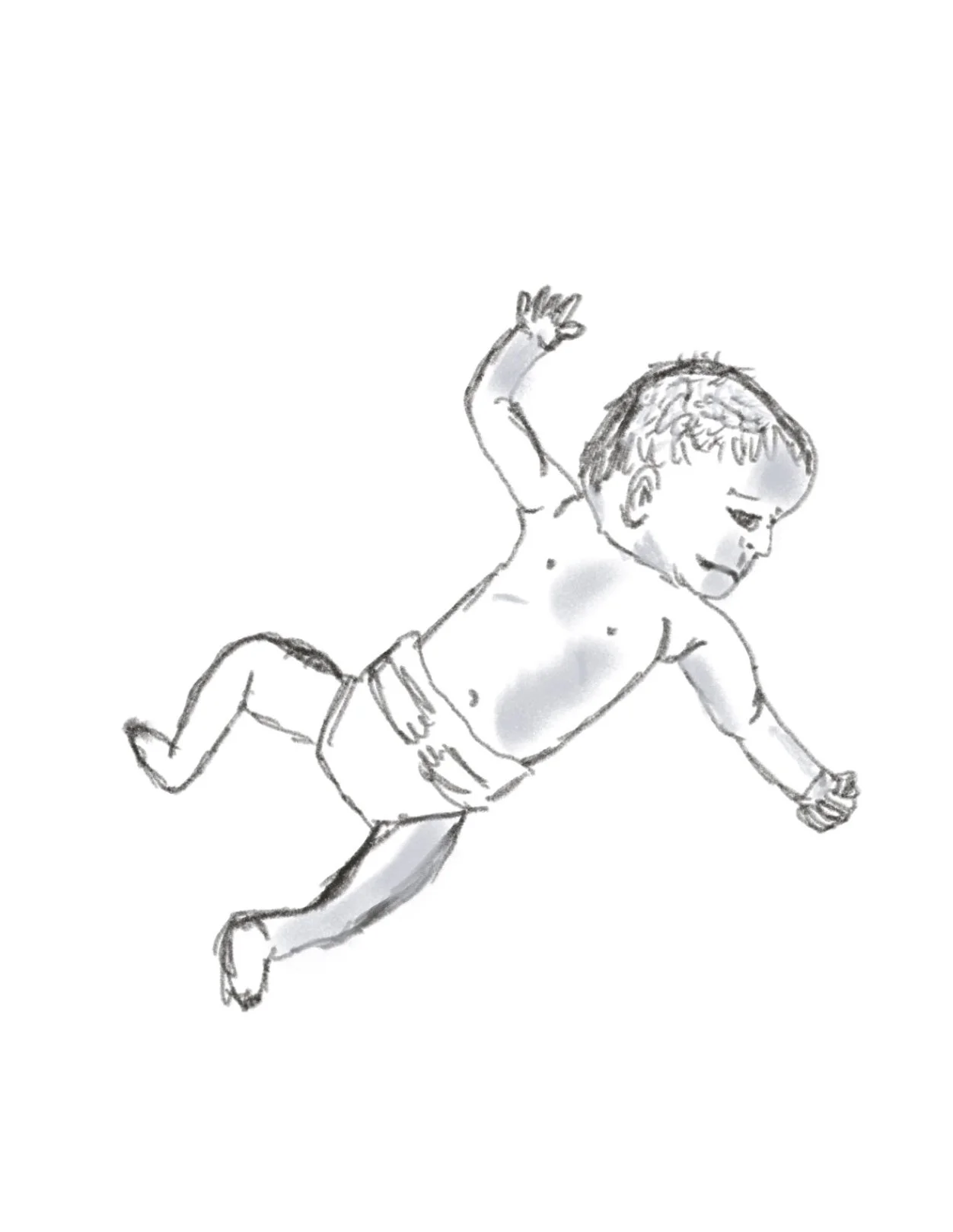
ATNR (sketch by Bailee Adler)
-Spinal Galant Reflex. This reflex also assists in the birthing process, facilitating hip movements as the infant descends the birth canal. Tactile stimulation on one side of the back stimulates lateral trunk flexion as well as waste elimination.6
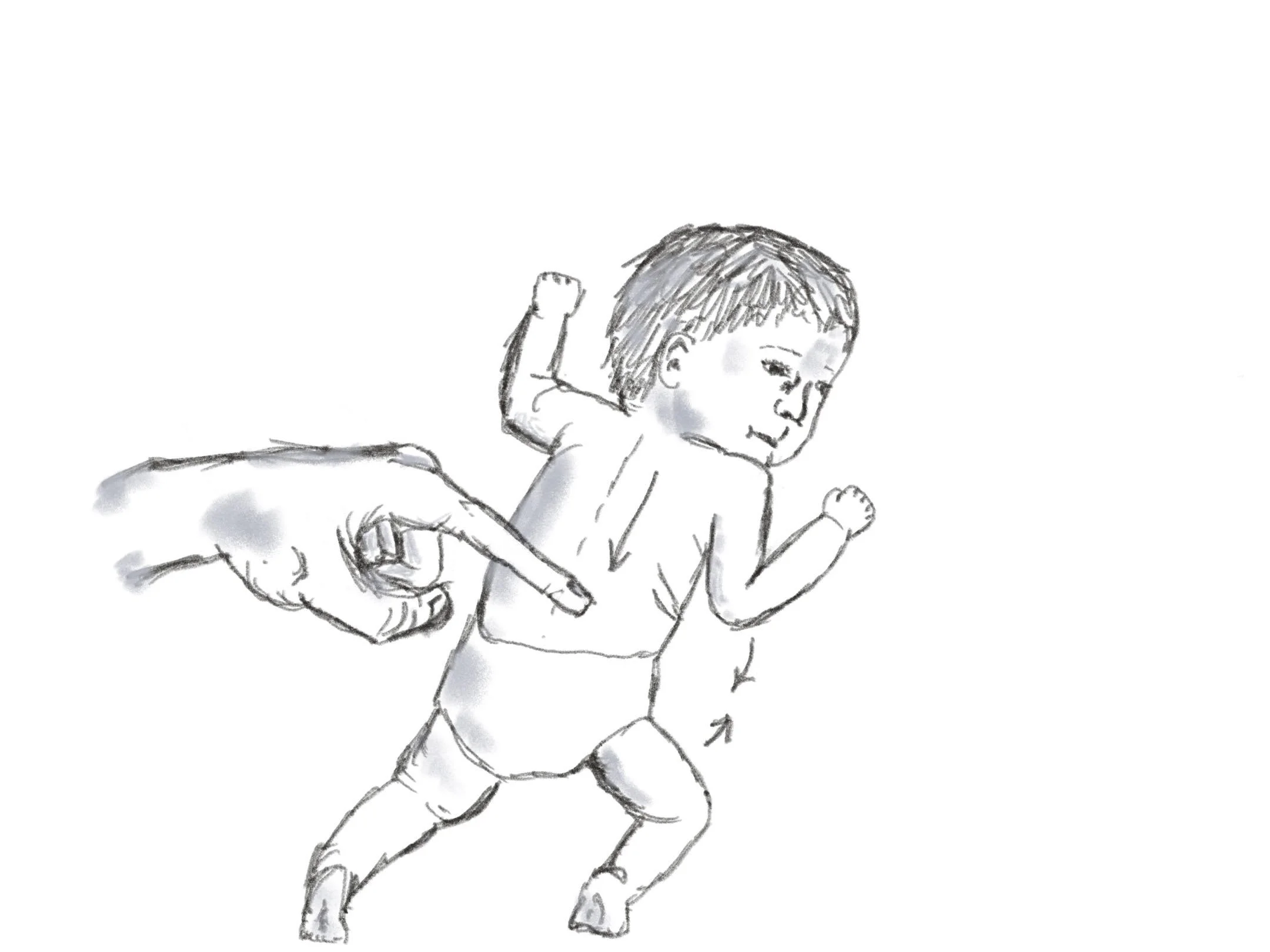
Spinal Galant (sketch by Bailee Adler)
-Tonic Labyrinthine Reflex (TLR). This reflex builds the foundation for postural stability of large muscle groups. It is stimulated when the infant’s head is bent forward in the prone position (belly down). You will see the infant’s arms and legs flex toward the body in response. In the supine position (back down) when the infant’s neck is extended their limbs will also extend.6
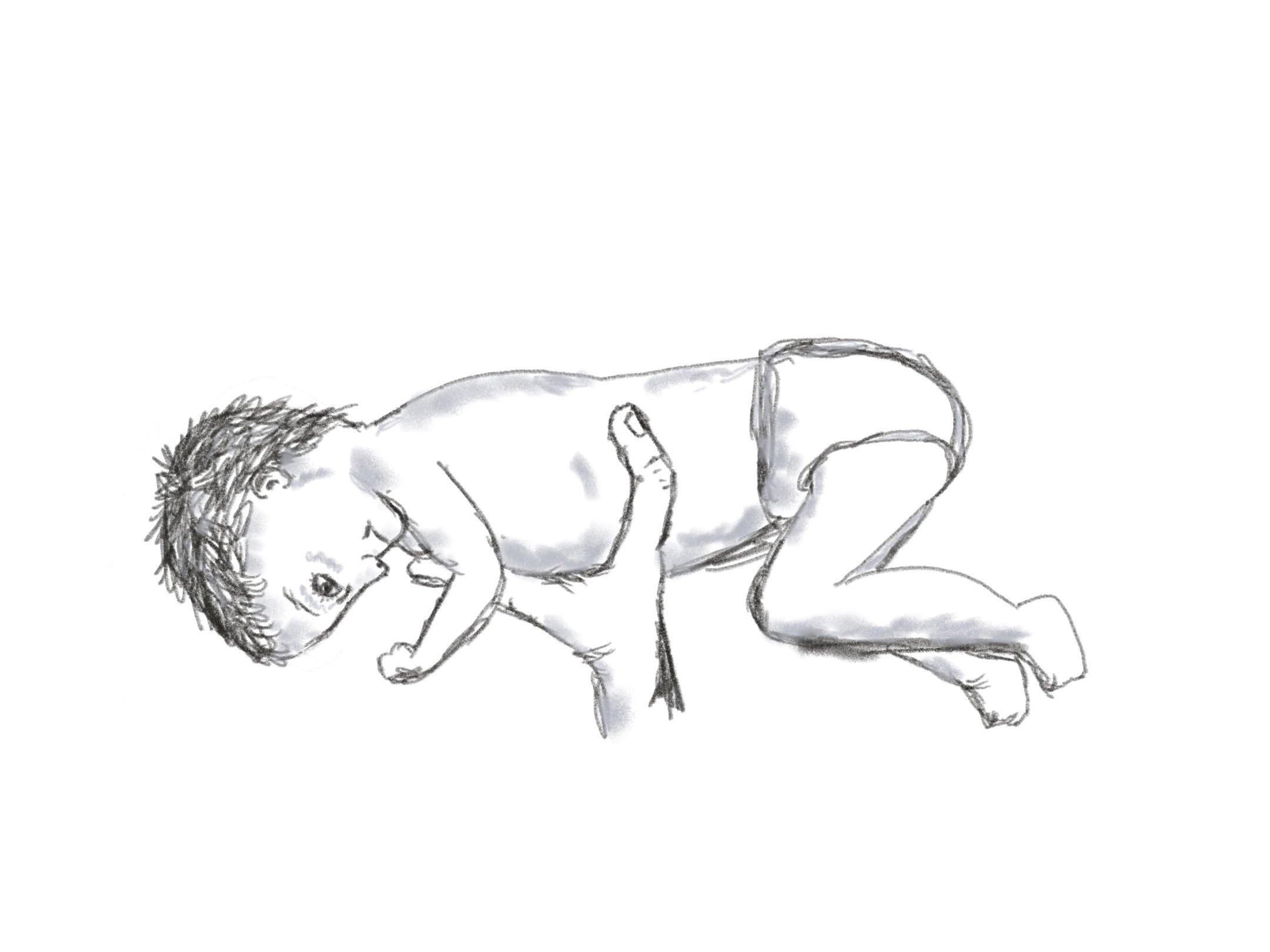
TLR prone position (sketch by Bailee Adler)
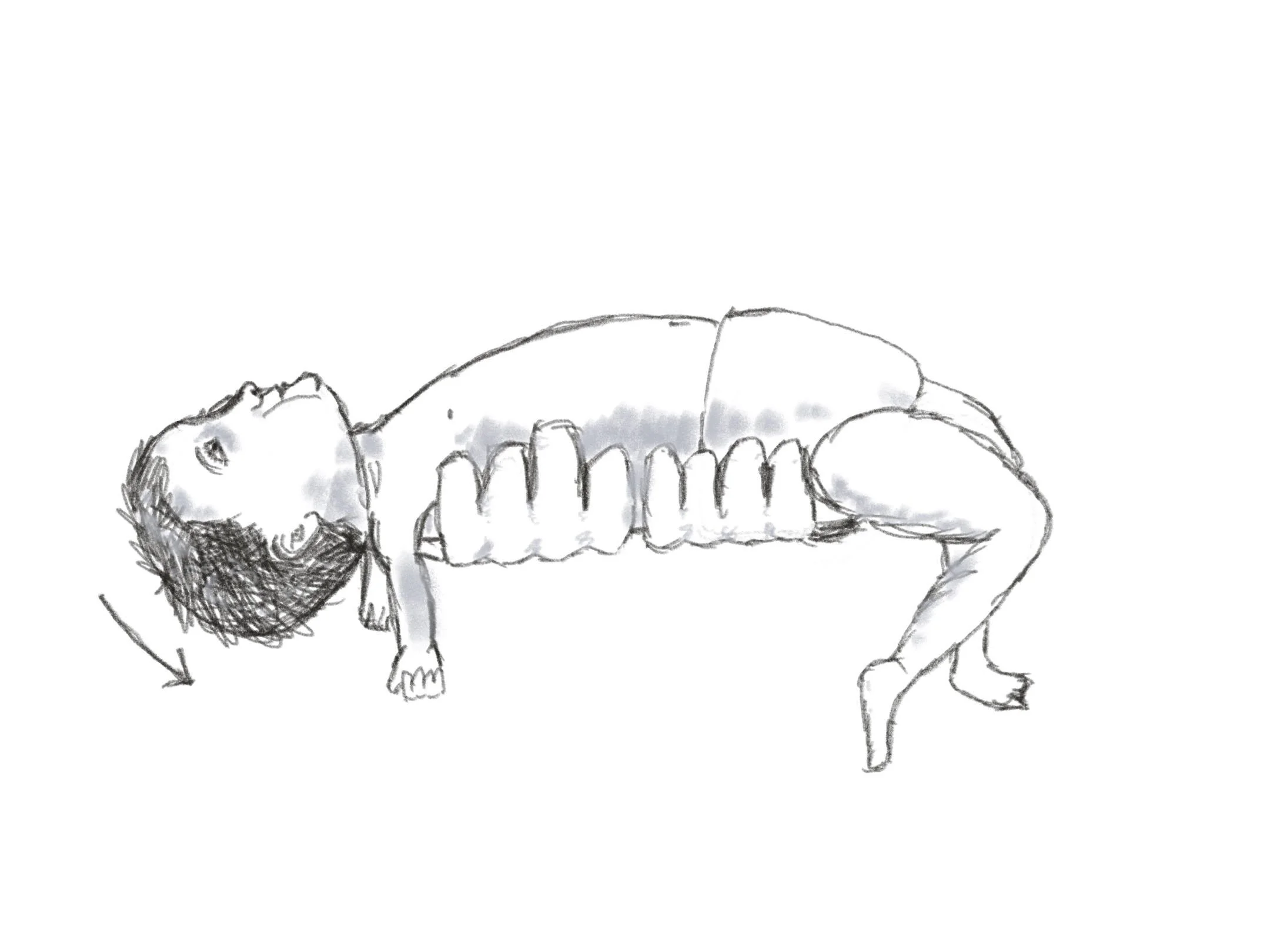
TLR supine position (sketch by Bailee Adler)
What Should My Baby Be Doing at 2 Months?
1-2 Month Milestones and Reflexes
Between one and two months you’ll notice your baby:
-supporting their head on their own while being held
-smiling back at you
-lifts their chest and supports themselves on their forearms when on their belly
You’ll continue to notice the:
-Moro (this may be beginning to fade)
-Rooting Reflex
-Palmar Grasp Reflex
-ATNR
-Spinal Galant
-TLR6
What Should My Baby Be Doing at 3 Months?
2-3 Month Milestones and Reflexes
Between two and three months you’ll notice your infant:
-consistently holding their head on their own and for longer periods of time
-can lift their chest and head while in prone on their forearms
You’ll continue to notice the:
-Moro: This reflex should begin to “integrate” or go away completely at this time. This is a sign that your child’s nervous system is maturing and developing more dynamic and voluntary movement patterns. If you notice that your baby’s moro is still really strong at this point, increase the amount of floor play. You can also gently stimulate it more often by holding their back, neck and head with your arms and quickly reclining them about 6 inches.
-Rooting Reflex
-Palmar Grasp Reflex
-ATNR
-Spinal Galant
-TLR6
How do I play with my baby?
Children, even the one-day-olds, learn best through play. For infants, play is all about caregivers providing safe opportunities for unrestricted movement. Lay your baby in a safe place on the floor and stay close to them. Give them time to wiggle while on their backs as you read, show them toys, or talk to them while you hold your face close. Give them time on their bellies while you do the same things. Comfort them if they get upset, hold them for a while and try again.
At this point it’s not about how long your baby is able to play on the floor— it's about the number of opportunities you are giving them to do so. Make it part of the rhythm of your day to let them play on the floor during their wake windows, even if it’s only for a minute or two at a time to begin with.
During their floor-time is a great time to stimulate their primitive reflexes to give their bodies the reps they need to lay the foundation of their sensor-motor nervous system. As you trigger your infant’s primitive reflexes, move gently, slowly, and tell your baby what you’re doing in a calm voice, or sing to them as you play. If you’re too nervous to do any of these movements, wait to ask your pediatrician or therapist (OT or PT) to help you.
To trigger the Palmar Reflex: Simply press your finger or thumb into the center of your baby’s palm and watch them wrap their sweet little fingers around yours. You can do this with their feet as well by pressing the center of their foot to curl their toes.
To trigger the Moro Reflex: Move your baby into a seated position in your lap or on the floor. Supporting her back, neck and head with your hands and forearms– quickly move her backward into a reclined position while holding her to begin the Moro Reflex.
To trigger the ATNR: Lay your baby on her back. Gently turn your baby’s chin to the right or left to begin the ATNR. You’ll see her straighten her arm and leg on the side she is facing and bend her limbs on the other side. Repeat to the other side.
To trigger the Spinal Galant Reflex: While your baby is on her belly, place your index finger on one side of her spine near her shoulders and gently stroke down to her hips to begin the Spinal Galant Reflex. Watch as she curls her body to the side you are touching. Repeat on the other side.
To trigger the TLR: Lift your baby, supporting her head and body on your hand and forearm, on her tummy (the football carry). Slowly allow her head to bend forward as you bend your wrist back, beginning the Tonic Labyrinthine Reflex (TLR prone position). She will curl her limbs and neck toward her body.
Turn your baby over in your arms so she is on her back supported, again, by your hand and forearm. Gently bend your wrist back to allow her neck to bend backward. Watch as she extends her neck and arms (TLR supine position).
*This is intended for educational purposes only and not intended to be a substitute for medical advice. If you’re noticing anything that seems “off” with your child, please contact your pediatrician. Always consult with them before beginning any new movement program with your infant so they can more accurately account for your infant’s specific needs and uniqueness.
You’ve got questions! I’d love to hear them!
I’ll send you a FREE printable sheet that covers these reflexes and how to trigger them. Slap it on your fridge or have it on your phone to have it handy for play time to give your baby some brain and body boosting movement opportunities!
Just pop in your email down below and message me “FLEX” and I’ll send it on over.
P.S. Cheers to you for making it all the way to the bottom of this nerdy blog post. You are a great mom learning more to do the best for your baby and YOU’RE DOING GREAT!
Take care, and God bless!
-Bailee
Sources:
1.https://www.ncbi.nlm.nih.gov/books/NBK554606/
4. https://publications.aap.org/aapnews/news/19554/CDC-AAP-update-developmental-milestones-for
5. https://www.cdc.gov/act-early/milestones/index.html
6. https://www.occupationaltherapy.com/articles/understanding-primitive-reflexes-they-impact-5409-5409
7. https://www.stanfordchildrens.org/en/topic/default?id=newborn-reflexes-90-P02630
